
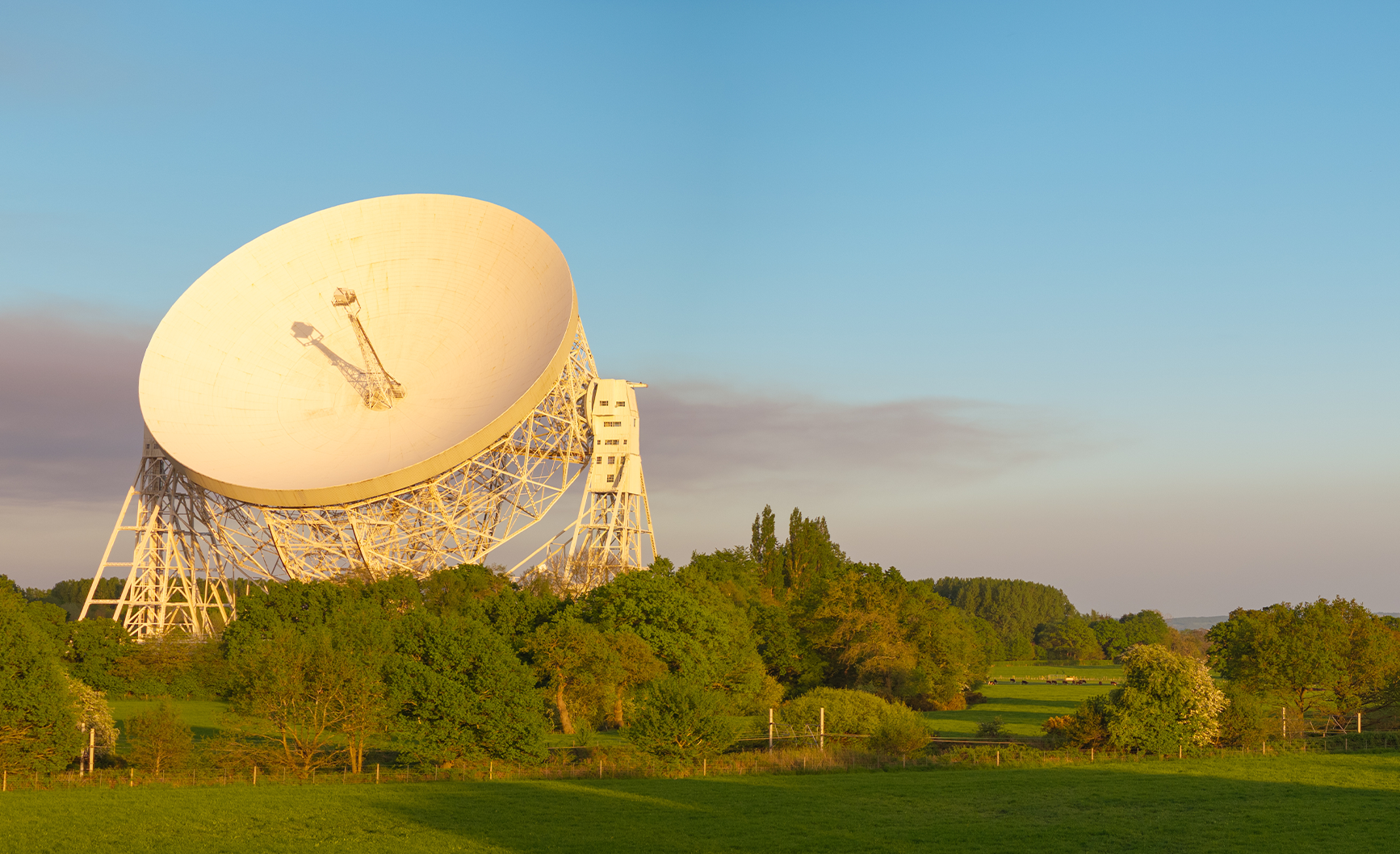
Ever since I was a child, growing up in Cheshire, I have enjoyed travelling along a road that takes you from a village called Kingsley down into the next village, Frodsham. The road rises high above the Cheshire plain, around Frodsham Hill, and I always used to look out across the expanse of land for one thing – Jodrell Bank. Which way would it be tilted today? I wondered what the radio telescope was looking for and what space really looked like, how many stars could it see?
I vividly remember visiting Joddie Bank (as my Dad used to call it). It was captivating – the most exciting place I’d ever visited. We learned all about Copernicus, the constellations and what a radio telescope did. I brought back a worksheet that I read over and over (I think I still have that somewhere!). I was inspired by that place - and then yesterday the news broke that it is likely to be closed next April.

Helen Reynolds
Account Manager, Radical Moves Ltd
The irony is that I was only reading days ago about the incredible work by a research partnership led by the University of Birmingham and comprising experts from the University of Manchester, Goonhilly Earth Station, Massachusetts Institute of Technology Lincoln Laboratory, and Australia's national science agency CSIRO to repurpose Jodrell Bank so that it can be used to track space debris. This is a scourge that poses a serious threat to our space environment and also to us here on Earth. Let’s be clear. This is the UK’s largest space telescope. It’s been operational for 70 years. We are looking to develop our space capabilities – and it’s being closed down? Where is the sense in this?
Jodrell Bank has been a mainstay and forerunner of radio astronomy, not just in the UK but in the world. It was used during the Cold War to monitor Soviet missiles and it is a UNESCO World Heritage Site.
As I previously stated, the University of Birmingham has led a team using the 76-metre Lovell Telescope and e-MERLIN antennas (a network of 6 antennas around the country) Long Baseline Multistatic Radar (LBMR) capability for real-time space object characterization. This means that the telescope and associated infrastructure is now dual use and can be re-tasked for vitally important space domain awareness – a critical function as our orbits grow increasingly crowded. Surely the £2.8 million investment in the facility is essential, especially as we are so committed to making space a big part of our future. That’s not to mention the 28 jobs that it will axe and the 3000 scientists that rely upon it.
At a time when we need to be investing in space capability and the knowledge of just how important space is for our future, how can the closure of very well established and well used facilities like Jodrell Bank help anyone? That’s not to mention the inspiring power of Jodrell Bank and places like it that ignite young minds and encourages them towards a career in space. With the proven ability to re-task this kind of infrastructure, we should be looking at the other to drive a circular, more cost-effective space economy, not to stifle it.
If you would like to help to save this icon of the UK space sector, sign this petition.